Being a football player, one of the first thing I did after confirmation of the need for surgery was to look for professional football players who have undergone an ACL reconstruction. Surprisingly, this information wasn't easy to find. It took me a lot of googling to make a comprehensive list.
I knew that Michael Owen had an ACL tear. He ruptured his ACL in the 2006 world cup. Unfortunately for him, that was the start of a string of other injury problems. But it's worth noting that none of his other injuries concern the ACL.
I think one of the best examples one could look to is that of the Italian, the world cup winning former Juventus playmaker Alessandro Del Piero.
When asked recently, about how long he intends to play football, this is what he had to say: “How
long do I want to play on for? Up to the age of 40. [My physique] changed on
November 8, 1998 [Just a day before his 24th birthday, he suffered an ACL
tear]. I was out for 12 months, four on crutches. It changed my career and made
me a better player. Before it I was a tough guy, fast, technically good, still
only on instinct. After I was able to tame it too and am more balanced."
We know that he had a good career after his return. He holds a host of records for Juventus, including that of the club's top scorer and the most appearances for Juventus. He's currently playing for Sydney FC.
Another illustrious Italian who makes this list is none other than Roberto Baggio.
He tore tore his ACL late on in his career and made an astonishingly quick recovery in 76 days! Despite making a swift recovery, he was left out of the squad that went to the 2002 world cup, which saw Italy eliminated by South Korea in the pre-quarters.
Having seen the case of two second strikers, let's look at two of English Premier League's most prolific strikers. Indeed, the Premier League's top goal scorer himself had a ruptured ACL! Yes, Alan Shearer, in his early days at Blackburn Rovers snapped his right ACL in 1992.
Well, I don't think I have to add any more to this. The injury did no harm to the abilities of this classic English centre-forward as he went on to become the Premier League's top goal scorer with 283 goals in 559 appearances.
Now here's one striker most Arsenal fans will hate: Ruud van Nistelrooy! When it looked all set for van Nistelrooy to complete a move to Manchester United from PSV Eindhoven in the summer of 2000, he ruptured his ACL in training and the move was axed. Later on in April 2001, he did make the move to Manchester United.
He spent 5 seasons as a Red Devil, during which he amassed 150 goals in 220 appearances. With 38 goals, he is also the club's all-time European top goalscorer. Well, he did miss a penalty against Arsenal in our Invincible season! Late on in the game with the score at 0-0, he had the chance to win the game for United. His penalty struck the post, and the rest, it's all history! Arsenal finished the season unbeaten!
One of the integral members of the Invincible Arsenal squad was the graceful, delightful midfielder Robert Pires. Hardly has the Premier League seen a player with an exquisite touch and extraordinary vision such as Pires's. He was the embodiment of Arsenal's quality and free flowing football.
Pires arrived at Arsenal in 2000 and endured a difficult first season. However, in his very next season, Robert Pires became a very influential player. In a season which saw Arsenal win the double (the Premier League and F.A Cup), Pires was the top assist maker in the League and was voted FWA footballer of the year and Arsenal's player of the season. All this despite missing out the last two months with an ACL tear! This picture above sums up everything about Robert Pires that season! He made a comeback from his injury the following season and initially found it tough. But eventually, he returned to form and scored the lone goal in the FA Cup final against Southampton. Again in the next season, which was Arsenal's Invincible season, Pires went on to play a crucial part. He, along with Henry, scored a combined 57 goals, and some of those were sumptuous, like the winner against Liverpool at Anfield.
The current Arsenal pass master, Mikel Arteta, too had an ACL tear during his time at Everton.
The Arsenal vice-captain tore his ACL in Feb '09 and returned to action in Jan '10. He is currently one of Arsenal's and the Premier League's best and top passer.
Other notable players with an ACL reconstruction include Anderson, Phi Jagielka, Nemanja Vidic, Robbie Fowler, Joe Cole, Luis Garcia, Giuseppe Rossi...the list can go on! If you have a need to know who else from the Premier League is currently on the ACL treatment table, you can find it here, on the physioroom website.
We don't need evidence more than these to be convinced that an ACL tear cannot ruin one's quality. Although it takes is a lot of patience and work at the gym during the rehab period, it can only make one stronger. It has been just over a couple of months now, since I had the reconstruction surgery. I've made good progress in the gym so far. Everyday, as I go to work and return home, I pass by Madhavan Park, which is where I've played most of my football in the past two years, and I see people playing football. I know, that in a few months time, I'll be one among them, playing at a level higher than before.
I knew that Michael Owen had an ACL tear. He ruptured his ACL in the 2006 world cup. Unfortunately for him, that was the start of a string of other injury problems. But it's worth noting that none of his other injuries concern the ACL.
I think one of the best examples one could look to is that of the Italian, the world cup winning former Juventus playmaker Alessandro Del Piero.
 |
| Alessandro Del Piero in action for Juventus |
We know that he had a good career after his return. He holds a host of records for Juventus, including that of the club's top scorer and the most appearances for Juventus. He's currently playing for Sydney FC.
Another illustrious Italian who makes this list is none other than Roberto Baggio.
 |
| Roberto Baggio |
Having seen the case of two second strikers, let's look at two of English Premier League's most prolific strikers. Indeed, the Premier League's top goal scorer himself had a ruptured ACL! Yes, Alan Shearer, in his early days at Blackburn Rovers snapped his right ACL in 1992.
 |
| Alan Shearer...his trademark calebration |
Now here's one striker most Arsenal fans will hate: Ruud van Nistelrooy! When it looked all set for van Nistelrooy to complete a move to Manchester United from PSV Eindhoven in the summer of 2000, he ruptured his ACL in training and the move was axed. Later on in April 2001, he did make the move to Manchester United.
 |
| Ruud van Nistelrooy |
One of the integral members of the Invincible Arsenal squad was the graceful, delightful midfielder Robert Pires. Hardly has the Premier League seen a player with an exquisite touch and extraordinary vision such as Pires's. He was the embodiment of Arsenal's quality and free flowing football.
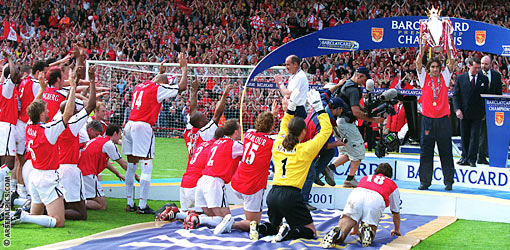 |
| Robert Pires, recovering from an ACL reconstruction! |
The current Arsenal pass master, Mikel Arteta, too had an ACL tear during his time at Everton.
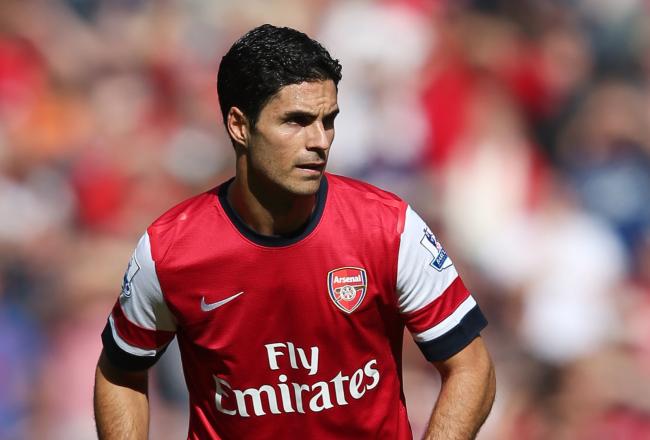 |
| Current Arsenal vice-captain, Mikel Arteta |
The Arsenal vice-captain tore his ACL in Feb '09 and returned to action in Jan '10. He is currently one of Arsenal's and the Premier League's best and top passer.
Other notable players with an ACL reconstruction include Anderson, Phi Jagielka, Nemanja Vidic, Robbie Fowler, Joe Cole, Luis Garcia, Giuseppe Rossi...the list can go on! If you have a need to know who else from the Premier League is currently on the ACL treatment table, you can find it here, on the physioroom website.
We don't need evidence more than these to be convinced that an ACL tear cannot ruin one's quality. Although it takes is a lot of patience and work at the gym during the rehab period, it can only make one stronger. It has been just over a couple of months now, since I had the reconstruction surgery. I've made good progress in the gym so far. Everyday, as I go to work and return home, I pass by Madhavan Park, which is where I've played most of my football in the past two years, and I see people playing football. I know, that in a few months time, I'll be one among them, playing at a level higher than before.
